A Designer's Review: The Medical Icon for Embroidery Projects
The First Impression: Clean, Clear, and Immediately Recognizable
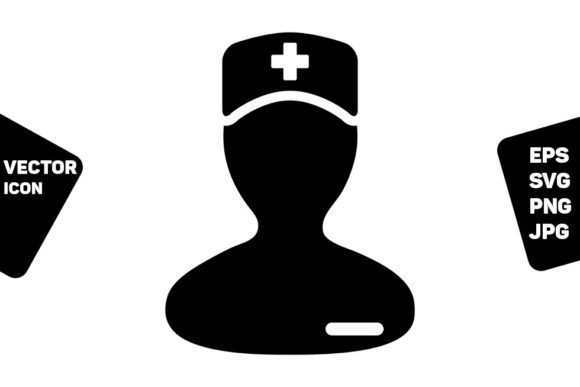
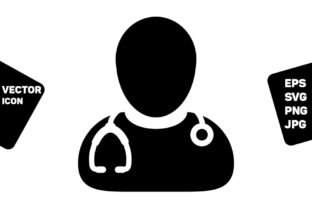
When you first open the Healthcare Icon Vector Male Doctor, the clarity hits you. This is a glyph-style icon, meaning it's a solid silhouette without internal detail. The profile of the doctor with his stethoscope is instantly familiar. The mood it creates is professional, trustworthy, and modern. There's a quiet confidence in its simple lines. For an embroidery designer, that simplicity is a gift. It tells me this isn't a design meant for a highly detailed, thread-intensive portrait. Instead, it's a graphic symbol. Its visual personality is clean and direct, which makes it a natural candidate for projects where the message needs to be understood quickly—think a custom embroidered tote bag for a nurse, an apron for a clinic volunteer, or a patch for a medical student's backpack.
Where This Design Thrives in Real Projects
Let's talk about where this icon will truly shine. I'm picturing a specific scenario: a client asks for a small batch of embroidered sweatshirts as thank-you gifts for a team of doctors. The Healthcare Icon Vector Male Doctor is perfect here. Its glyph nature means it will stitch out with clean, solid satin or fill stitches. The lack of intricate interior detail prevents stitch crowding, resulting in a crisp, professional look on the garment. This is equally excellent for baby items—a simple, soft emblem on a blanket for a new pediatrician's family. It feels safe and recognizable.
For craft businesses and Etsy sellers, this icon is a versatile design asset. It can anchor a whole product line. Imagine it on the corner of a kitchen towel in a "Doctor's Home" gift set, or centered on a pillow cover for a medical office lounge. As a small shop owner, you could use it to create embroidered caps for a local clinic, transforming it from a digital file into tangible small shop merchandise. Because it's a vector graphic provided in multiple formats like SVG and EPS, it scales beautifully. You can embroider it small on a hat or larger on a tote bag without losing its essential shape, which is crucial for brand consistency across different products.
The Gift of Simplicity: Visual Appeal and Customer Trust
This simplicity directly boosts the finished product's value. A clean, well-stitched icon looks intentional and high-quality. On a personalized gift, it feels thoughtful rather than overwhelming. For the customer receiving an embroidered item with this design, it conveys professionalism and respect. There's an immediate recognition that builds customer trust in your handmade work. On an Etsy listing or a printable mockup, the design presents clearly, helping potential buyers instantly understand the product's purpose. This enhances buyer engagement—they don't have to decipher a complex image.
Caution Zones: Where to Proceed with Care
Even with a strong design, practical judgment is key. The Healthcare Icon Vector Male Doctor, with its solid shape, requires attention in a few areas. On very small hoop sizes, the stethoscope loop and the profile's chin could become a dense, puckered area if the stitch density is too high. Testing on scrap fabric is non-negotiable here.
Textured fabrics like some towels or stretchy fabric like t-shirts may blur those crisp edges if the stabilizer isn't robust. Embroidering it on dark fabric demands a thoughtful thread color choice—a mid-tone gray or blue might lose impact; a bright white or a very light color will make it pop. The design is likely not ideal for products with detailed corners or tiny lettering incorporated within it, as it's a monolithic shape. And on curved surfaces like caps, you need to ensure the design's orientation works with the curve so the doctor's profile isn't distorted.
Practical Notes from the Embroidery Desk
Before you run this embroidery file, here's my checklist. Always test the design on scrap fabric first, using the same material as your final project. Check thread color contrast rigorously against your background fabric. Review the stitch density in your software—for a solid glyph, you want a fill that is dense enough to look solid but not so dense it stiffens the fabric. Confirm hoop size suitability; this icon will likely work best at a moderate size, not extremely miniature. Inspect the small details like the stethoscope ear tips in your preview.
It's wise to test it in black and white mockups to see its form without color influence. Compare light and dark fabric backgrounds digitally before committing thread. Use a proper stabilizer suited to your fabric; this is not a design where you can skip that step. Crucially, check whether the design's license permits use for both personal and commercial projects. Before selling finished items like embroidered patches or custom apparel in your craft business, confirm you have the right to do so. This is a fundamental step for any digital embroidery file you use commercially.
The Final Stitch: A Reliable Asset for Makers
The Healthcare Icon Vector Male Doctor isn't a flashy, complicated design. Its value lies in its reliability. For the embroidery designer, the small business owner, the crafter making holiday gifts for a medical friend, it's a tool. It gets the job done with clarity. It elevates a simple tote bag into a statement piece for a healthcare worker. It turns a basic sweatshirt into a valued team appreciation gift. It adds a touch of thoughtful recognition to a baby's blanket.
When used with practical care—attention to fabric, stabilization, size, and licensing—this icon transitions smoothly from a graphic on a screen to a clean, professional stitch on a product. It supports your work as a maker by being straightforward and effective. That, in the end, is what makes a design asset truly useful: it helps you create something excellent without fighting you in the process. This icon, in its quiet, solid form, does exactly that.