Beyond a Symbol: When the Medical Box Icon Stitches Up Real Work
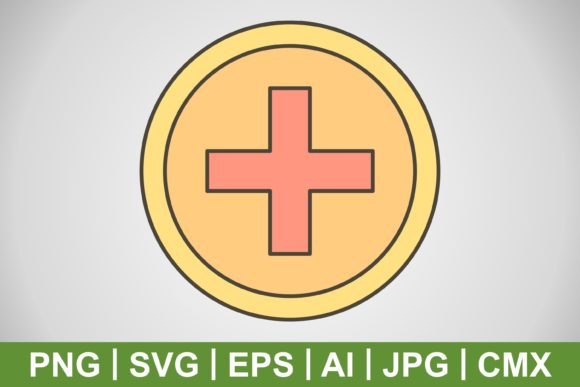
You’ve browsed through hundreds of icons, looking for that clean, universally understood graphic that will work for a specific project. This one, simply called Medical Box, is exactly that: a crisp, two-dimensional representation of a cross-topped case. On screen, it looks perfectly serviceable. But the real test begins when we take it from the digital world—with its provided SVG, EPS, and JPG files—and commit it to thread and fabric. How does it translate? Where does it shine? And where might it need a bit more consideration from our embroidery perspective?
The First Impression: Clean Lines & Quiet Confidence
Opening the design, the immediate mood is professional and calm. It’s not a frantic急救 symbol or a detailed hospital scene; it’s a stable, contained box. The shape is straightforward, the lines are clean, and the level of detail is purposefully minimal. This visual personality suggests reliability rather than emergency. For embroidery, that’s a fascinating starting point. It means this design won’t shout or overwhelm a garment; it will sit with a quiet confidence. It naturally belongs to projects where clarity and recognition are key, but where overt drama isn’t desired.
A Scenario: Crafting Gifts for a Clinic Staff
Imagine you’ve been asked to create a set of custom embroidered tote bags for a local dental clinic to thank their team. You want a design that feels appreciative, professional, and slightly personal, but not overly medical or clinical. This Medical Box icon comes to mind. Its simplicity could be elegantly stitched onto a natural canvas bag, perhaps paired with a simple “Thank You” in a complementary font. The finished product wouldn’t look like a hospital promotional item, but rather a thoughtful, well-made gift that acknowledges their field. It’s this kind of nuanced application where the design’s personality truly emerges.
Where the Medical Box Embroidery File Performs Best
In real-life embroidery situations, this icon’s strength is its adaptability across a surprisingly wide range of products, provided we match the execution to the medium.
For custom apparel like polo shirts or lab coats for small businesses, it’s ideal for subtle branding. On a sweatshirt or t-shirt for a healthcare student, it’s a clean, personal identifier. Its clarity makes it excellent for a embroidered patch, easily applied to a backpack or uniform. In the realm of gifts and merchandise, it shines on aprons for a home care worker, pillow covers or blankets in a supportive care package, or tea towels in a nurse’s kitchen. For baby clothes or nursery decor themed around a healthcare family, its simplicity is safe and sweet, avoiding overly complex imagery.
For Etsy sellers and craft business owners, this design works as a core asset. It can anchor a line of products for medical professionals—think holiday gifts, wedding gifts for a doctor couple, or small shop merchandise like mugs or notebooks (using the JPG for printable mockups). Its straightforward nature aids brand consistency if used across different products. The visual appeal here is about stitching clarity and professionalism, which directly builds customer trust in your handmade presentation.
The Careful Considerations: Fabric, Scale, and Stitch
While versatile, this is not a design to hoop up blindly. Its clean lines demand precision to maintain their impact.
Scale is crucial. At very small hoop sizes, the cross on top and the box corners could lose definition if the stitch density isn’t managed well. It’s better suited to a medium size where the satin stitch or fill stitch outlining the box can be clear. On textured fabrics like some towels or stretchy fabric like t-shirts, using the right stabilizer is non-negotiable to prevent the straight lines from distorting.
On dark fabric, the choice of thread colors needs extra thought. A white or light-filled box might look great, but if the design uses internal details (check the actual file for this), they could disappear. Always test the design on scrap fabric first, comparing light and dark fabric backgrounds. For curved surfaces like caps, the square shape might need slight digitizing adjustments to flow with the curve, so test it in a small area first.
The beauty of the design’s simplicity is also its challenge: there’s no room for messy stitches. On products that need frequent washing, ensure the stitch coverage is solid enough to withstand wear without the icon fraying into ambiguity.
Practical Designer Notes Before You Stitch
- Always test on scrap. Use leftover fabric from your actual project to see how the embroidery file performs.
- Check thread color contrast. View the design in black and white mockups to understand its form without color.
- Review the actual file details. Open the provided vector files (SVG/EPS) to inspect any small interior details that might translate into tricky, dense stitch areas.
- Confirm your hoop size. The design likely isn’t a miniature; choose a hoop that lets the lines breathe.
- Use proper stabilizer. For clean lines on any fabric, this is your best friend.
- Clarify licensing. The product is categorized under Graphics and Icons. Before selling finished items or using it in commercial embroidery projects, confirm the license terms for the digital files.
- Consider its dual life. The JPG is great for digital product previews and printable mockups for your shop, while the SVG/EPS might be used for other design assets. The embroidery application is just one of its potential lives.
The Final Stitch: Value, Recognition, and Giftability
When stitched well, the Medical Box elevates a product through subtle recognition. It doesn’t scream its meaning; it conveys it with quiet authority. This increases the perceived product value for a niche audience—healthcare workers, their families, supportive communities. For a personalized gift, it feels considerate and specific without being overly sentimental. For a craft business, it fills a clear market need with a professional, easy-to-reproduce asset.
Ultimately, this icon is a workhorse. Its visual appeal in embroidery is directly tied to your skill in executing clean stitches on the right foundation. It won’t do the work for you, but it provides a perfectly solid, universally understood foundation upon which you can build beautiful, meaningful finished products. That, from a practical design standpoint, is often exactly what we need.